Choosing a wedding venue comes down to five things: whether the space fits your guest count, whether it suits the style you want, whether the date you need is available, what the price actually includes, and how much of the work the venue will handle for you. Settle those five and most of the rest of the planning follows.
The venue is the one decision that shapes every other one. It sets the atmosphere, it caps the guest list, it influences the décor and often the attire, and it determines how much coordination you are left to do yourself. A venue that includes catering, furniture and a coordinator removes a dozen separate decisions. A venue that provides only the room adds them.
This guide covers when to start looking, what to assess on a tour, the questions worth asking before you sign, and what happens once the date is booked.
When to Start Looking at Wedding Venues
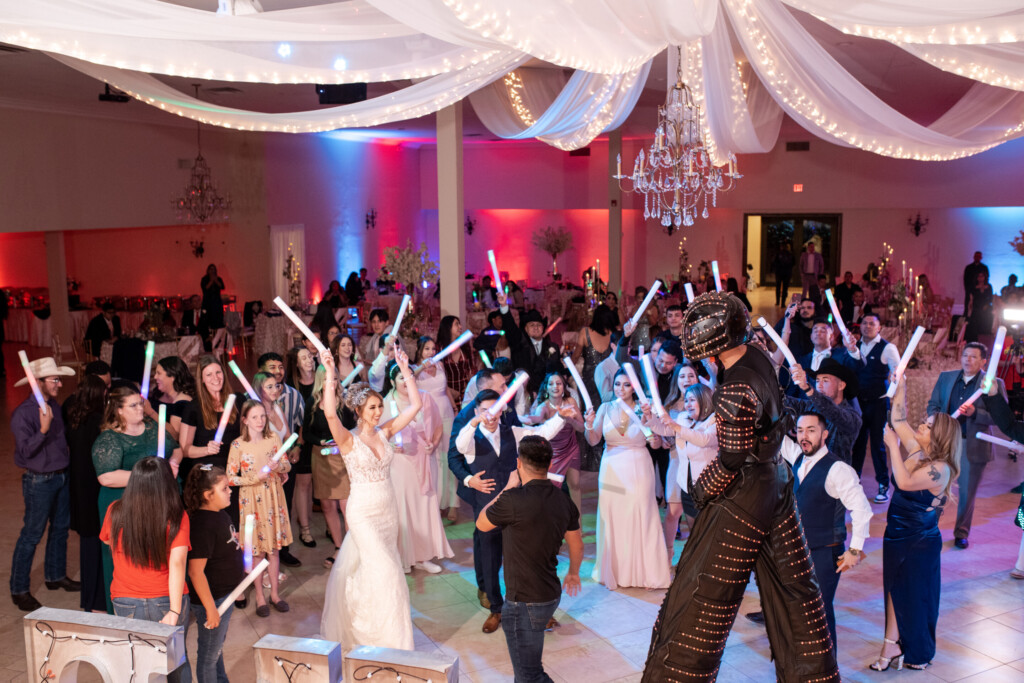
Start touring 12 to 18 months before the wedding. Venues with outdoor space or a large ballroom can book two years ahead for peak dates, and in Arizona the comfortable months fill first.
Starting early does more than protect your date. The venue sets your capacity and your layout, so almost everything else waits on it: vendors, invitations, the final guest list, the timeline. Booking the venue early turns a long list of unknowns into a plan.
Three things should pull your timeline earlier:
- A specific season. Spring and autumn are the most requested months in Arizona, and they go first. Our guide to the best time to get married in Arizona covers how each month actually behaves.
- A large guest list. The bigger the wedding, the fewer venues can hold it, and the harder those are to secure late.
- Guests traveling in. If people are flying, you want the date fixed early enough for them to book around it.
If your date is less than a year out, you can still find a good venue. You will simply have fewer options, and flexibility on the day of the week becomes your strongest advantage.
What to Look for When You Tour a Venue
A tour is not a viewing. You are there to test whether the space can actually hold the day you have in mind. Six things are worth assessing deliberately.
Capacity and Layout
Confirm the real capacity first, and ask whether that number is for seated dining or standing. A room that fits 200 for a cocktail reception may seat 140 once you add tables, a dance floor and a head table.
Then look at flow. Guests should move from ceremony to cocktail hour to reception without crowding a doorway or waiting while staff flip a room. Venues with separate spaces for each stage handle this far more gracefully than a single room that has to be reset mid-event.
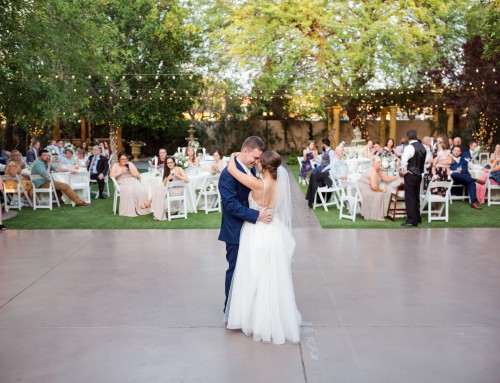
For reference, the ballroom at Garden Tuscana seats up to 500 guests and the garden holds up to 400, so the ceremony and the reception can each have their own space.
Ambiance and Style
The venue should already look most of the way like the wedding you want. Décor can adjust a room, but it cannot overcome one that is working against you, and the gap between the two is usually paid for in flowers, draping and lighting.
Walk in and ask what you would need to change. If the answer is “not much”, the venue is doing work for you. If you are mentally covering walls, you are about to spend a significant part of the budget hiding the room you are renting.
Indoor, Outdoor, or Both
Outdoor ceremonies are the reason many couples choose a venue, and in Arizona they are genuinely lovely for much of the year. But the weather question is not optional. Ask what the rain plan is, where it happens, how late the decision gets made, and whether moving indoors costs anything.
A venue with both options removes the risk entirely. At Garden Tuscana the garden and the ballroom are steps apart, so an outdoor ceremony can move inside without moving anyone across town.
Location and Accessibility
Think about the guest experience from the car park inwards. Parking, step-free access, proximity to hotels for anyone traveling, and how easy the place is to find after dark all matter more than they seem to on a sunny afternoon tour.
If a meaningful number of guests are coming from out of state, check what accommodation sits nearby before you commit.
What the Venue Actually Provides
This is where venues differ most, and where budgets go wrong. Some provide a room. Others provide catering, tables, chairs, linens, place settings, sound, lighting, a bridal suite, setup, cleanup and a coordinator.
Those two things are not comparable on price, and comparing them on price is the single most common venue mistake. Ask for the full list of what is included, then price the gap.
Dressing Rooms and Practical Spaces
Easy to forget on a tour, and very noticeable on the day. Where does the wedding party get ready? Is there somewhere to store gifts? Where do vendors load in? Is there a quiet room if someone needs one?
Questions to Ask Before You Book
Take these on every tour. The answers are what separate two venues that look similar in photographs.
Availability and Booking
- Which of my dates are available?
- How far ahead do you normally book for this season?
- Will you hold a date while we decide, and for how long?
- What is the deposit, and is any of it refundable?
- What is the payment schedule?
Cost and Packages
- Is there an all-inclusive package, and what exactly does it cover?
- What does the rental fee include — tables, chairs, linens, sound?
- Is there a minimum guest count, and what does each additional guest cost?
- Are setup, cleanup and overtime charged separately?
- What about tax, service charges and gratuities?
Vendors
- Is there a preferred vendor list, and am I required to use it?
- Can I bring my own vendors, and is there a fee if I do?
- Do outside vendors need insurance or licensing?
- Can I remove included vendors for a credit if I already have my own?
Setup, Staffing and the Day Itself
- Who handles setup and breakdown?
- How early can vendors get in?
- Is a member of your team present throughout the event?
- Is a coordinator included, or is that separate?
Décor and Restrictions
- How far can we customize the space?
- Are candles, sparklers or hanging installations allowed?
- Are there noise limits or a curfew?
- What are the alcohol rules, and is security required?
Contingencies
- What is the rain plan, and when is that call made?
- Is there backup power?
- What happens if we need to reschedule?
If a venue cannot answer these clearly on a tour, that is useful information in itself.
Picture the Whole Day While You Are There
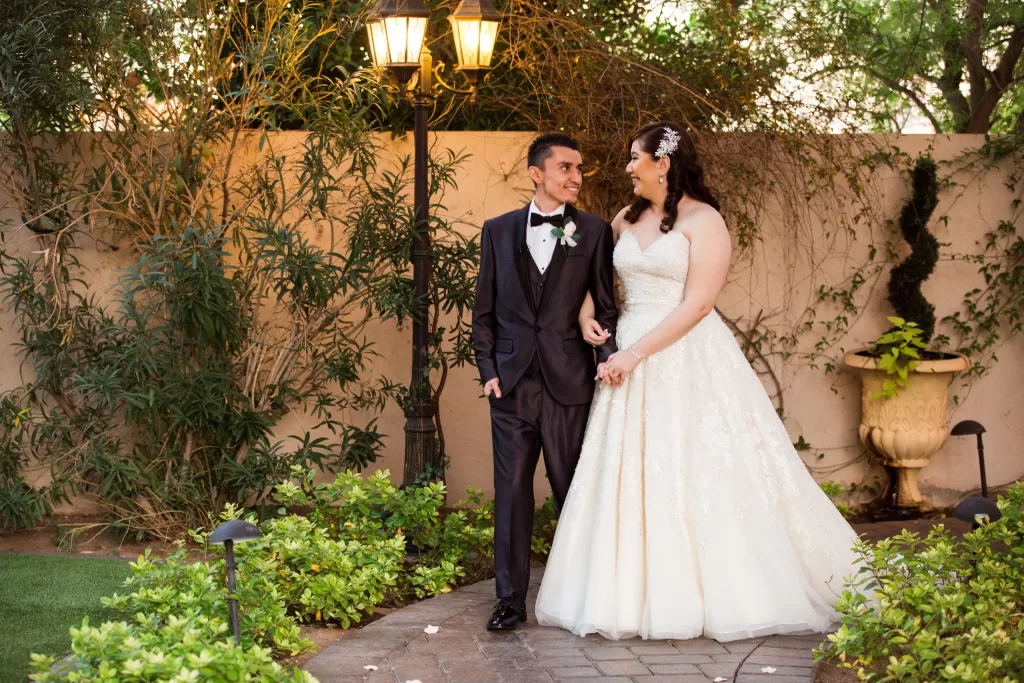
The most useful thing you can do on a tour is stop assessing the building and start running the day in your head.
Walk the route your guests will walk. Arrival, seating, the ceremony, where they go during photographs, how they find their table, where the bar sits, where the dancing happens, how they leave. Stand where you will stand during the vows. Look at what will be behind you in every photograph.
Ask to see photographs or video from real weddings held there, ideally at the same time of day and time of year as yours. A garden at four in the afternoon in March looks nothing like the same garden at seven in June. Our real weddings gallery is there for exactly this.
Two practical notes. Tour at roughly the hour your ceremony will start, because light changes everything. And take photographs on your phone as you go, because after three venues they blur together.
Comparing Venues Fairly
Build one simple comparison and fill it in the same way for every venue. For each, record the total estimated cost, what is included, the capacity, whether the ceremony and reception can both happen there, the rain plan, vendor flexibility and the payment schedule.
The important discipline is comparing totals, not headline prices. A venue charging a low rental fee and nothing else will often finish higher than a package that looked more expensive on the first page, once catering, rentals, staffing, coordination, setup and cleanup are added one invoice at a time.
If you are working to a fixed number, decide with your partner which three things matter most before you tour. Almost every budget decision after that becomes easier, and it is far less painful to trim a guest list or move to a Friday than to discover late that the venue you love needs another six vendors to function.
Why a Coordinator Changes the Day

Ask every venue whether a coordinator is included, because it changes what your wedding day feels like more than almost any other line item.
A venue coordinator handles the logistics attached to the building: working with caterers, setting up the ceremony and reception, greeting guests, keeping music and timing on cue, making sure the space is ready before anyone arrives, and watching over the operation while it runs. They work on your behalf so everyone involved understands what you actually want.
At Garden Tuscana a day-of coordinator is included with every wedding package rather than sold separately. Before the day they offer a complimentary tasting with our caterers, they are available six days a week for questions and visits, and in the final week they confirm details with your vendors and run the rehearsal. On the day they set the ceremony to your design, greet guests, make sure the wedding party can get to the suites, and cue the DJ, the processional and your entrance.
The difference it makes is simple. Somebody whose job is the logistics means nobody in your family has to spend the day doing it.
After You Book the Venue
Booking the venue is the point at which planning becomes concrete. Five things follow immediately.
Read the contract properly. Confirm the deposit, the payment schedule, the cancellation and rescheduling terms, and exactly which services are included. This is the moment to catch anything that was discussed but not written down.
Set a working budget with a buffer. Take an honest number, then leave ten to fifteen percent aside for the things nobody predicts. Decide with your partner which three elements you most want to spend on, and let that steer the rest.
Meet your coordinator. If the venue provides one, they become your main point of contact. Regular contact with them is what keeps plans from drifting.
Line up vendors around the venue. The layout and policies shape who you can use and when they can arrive. A preferred vendor list is worth taking seriously, because those vendors already know the space.
Build the timeline, then rehearse it. Map the day from vendor arrival to the final song, share it with the venue and every vendor, and run the ceremony at the venue beforehand. Rehearsals matter most for outdoor ceremonies, where spacing and timing are least predictable.
From there the usual sequence takes over: save the dates, invitations, attire, vows, music. Our guides to writing your vows and choosing music for each moment pick up where this one ends.
Touring Garden Tuscana
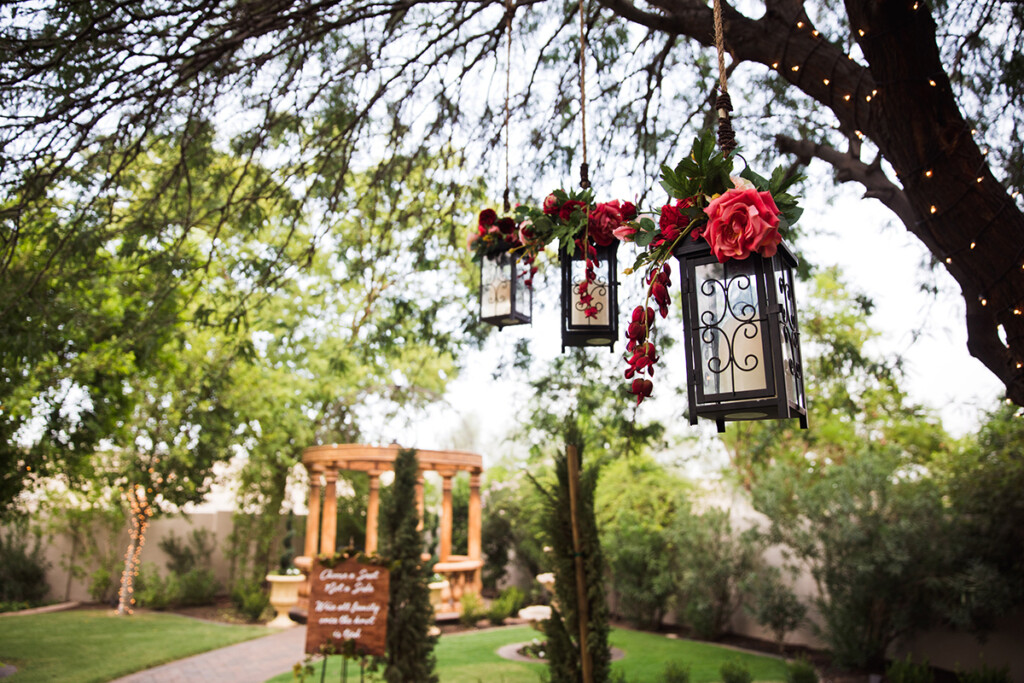
Garden Tuscana is a wedding and event venue in Mesa, Arizona, with an outdoor garden and an indoor ballroom on the same site.
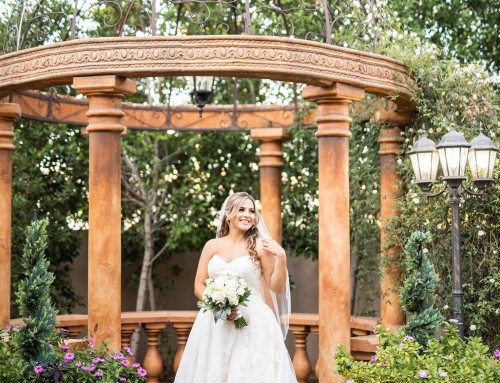
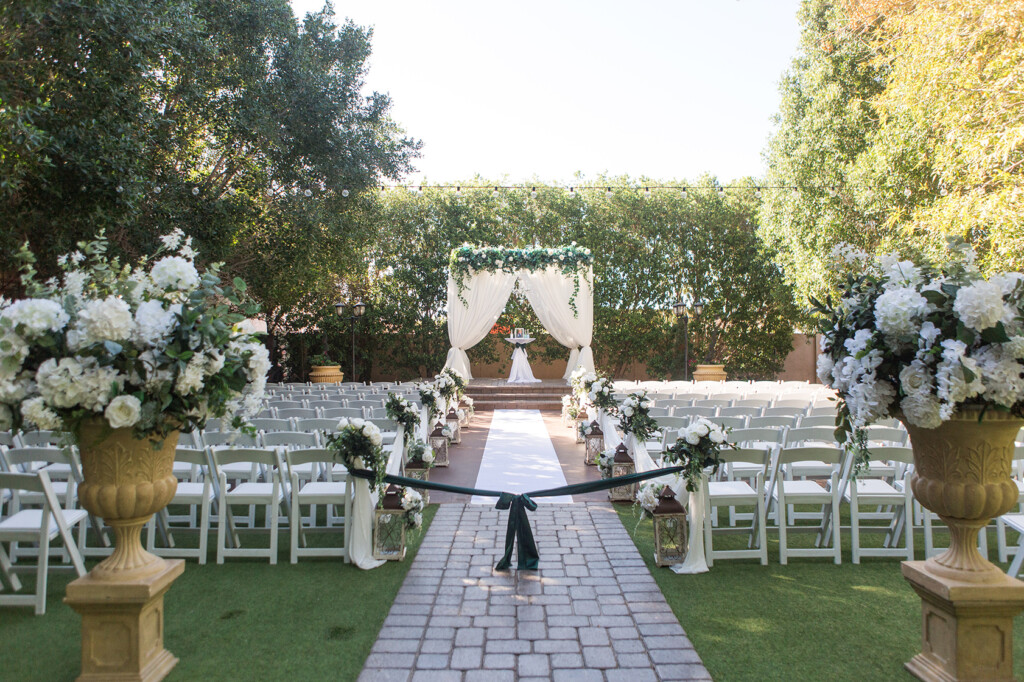
The garden holds up to 400 guests, with water and greenery features and a tumbled brick pathway leading to the arbor. The ballroom seats up to 500, finished in Tuscan décor, with more than 40 color themes to choose from. Because the two are steps apart, an outdoor ceremony and an indoor reception need no transport and no difficult weather decision.
Our all-inclusive wedding packages cover catering, décor, staffing, setup and cleanup, with a day-of coordinator included. Packages can be customized, so if you already have a photographer or florist you want to use, vendors can be removed for a credit.
Schedule a tour to walk the garden and the ballroom and talk through your date and guest count, or see current pricing first.
FAQs
How do I choose a wedding venue?
How far in advance should I book a wedding venue?
What should I ask when touring a wedding venue?
How many venues should I tour?
Is an all-inclusive wedding venue cheaper?
Should the ceremony and reception be at the same venue?
What happens if it rains on an outdoor wedding?
Does Garden Tuscana include a wedding coordinator?
Request an Accurate Quote
Please include your contact details, event date and amount of guests.
- Pricing is determined by your event date and amount of guests.
- Wedding packages can be customized to fit your needs and budget.
- Garden Tuscana offers interest-free monthly payment plans
Office Hours
Monday: 2:00 pm – 7:00 pm
Tuesday: 11:00 am – 7:00 pm
Wednesday: 11:00 am – 7:00 pm
Thursday: 11:00 am – 7:00 pm
Friday & Saturday: 10:00 am – 2:00 pm
Sunday: Closed
Address: 1915 W Guadalupe Rd Mesa, AZ 85202
Phone: (480) 839 2727
FAX: (480) 839 2728